BGLC 1Lab is the modern laboratory workflow system from BioNexus Gene Lab, connected from the clinic’s order to a reviewed report. It is designed for private AI that drafts while named people decide, and to open to clinic systems through an API. GeneMatrix Enterprise is its first assay module.
One lab,one record
 1LabOverviewOrdersDispatchReception3BenchRuns1StockReports2Agents4Lim W.Laboratory scientistDemonstration laboratory
Overview
Friday 30 October · Demonstration laboratorySpecimens received, last 14 days
AcceptedWith deviationRejectedWhere tests stand now
Needs attention
4 itemsThe laboratory overview: every specimen, run, report and agent draft across the laboratory.Product screens on this page are designs, shown with demonstration data.
A test passes through many hands: the clinic that orders it, the courier, reception, the bench, the scientists who check the run and the person who releases the report. 1Lab brings them into one record, so a clinic always knows where its test stands and a laboratory can show how every result was made.
- Clinicorders, labels and collects
- Couriercarries the manifest
- Receptionaccessions and decides
- Benchruns plates with controls
- Reviewverifies the results
- Releaseauthorises the report
1Lab is built by BioNexus Gene Lab Corp. (Nasdaq: BGLC) in Kuala Lumpur.
Agents draft. Rules check. People decide.
1Lab’s agents are designed as AI assistants that prepare work for the person who asks: a message to a clinic, the fields from a paper requisition, the relevant passage of the current approved procedure. Rules check every draft against the record, and a named person uses, edits or rejects it, so decisions on specimens, runs, results and reports stay with people. The models will be private and run inside 1Lab’s secured environment, where laboratory and patient data stays.
- 1A person asksNurul H., reception, on specimen 1L-S-000151Draft clinic messageFixed kinds of draft, never an open prompt
- 2Only what the task needsCollection timemissingClinicKlinik SampelPatientreference only
- 3A private model draftsA version-pinned model, validated for this kind of draft and approved by the laboratory director. No tools, and nothing it reads can send or change anything. Public AI services: not connected
- 4Rules check the draftApproved template: missing collection timeEvery value traced to the record
- 5Nurul H. decidesUseEditRejectThe draft expires if the specimen record changes first
- 6RecordedUsed with edits by Nurul H. · model version and draft kept with the step · 10:02
- Drafts on requestStaff ask for a set kind of draft from the screen they are on. There is no open prompt, and nothing an agent drafts takes effect until a person uses it.
- Rules before AIWorklists, plate maps, control checks and manifests run on fixed rules. AI only fills in the words and fields that rules and people then check.
- ConnectedClinics, couriers, instruments and assay modules such as GeneMatrix share one record, and clinic systems will connect through the 1Lab API under the same permissions as people.
- Private AIModels will run inside 1Lab’s secured environment with no tools and only the data each task needs. The laboratory director will approve each kind of draft after validation, and a model change will be validated again. 1Lab is designed so that data is never sent to public AI services or used for training.
CogniAI, for the paper a laboratory still runs on
Much of a laboratory’s work still arrives on paper: requisitions, supplier certificates and the records of past cases. In October 2026 BGLC agreed an exclusive Malaysian healthcare license to CogniAI, the document-intelligence platform of Ruanyun Edai Technology Inc. (Nasdaq: RYET), which recognises, classifies and extracts information from documents and records. Once the license closes, BGLC plans to make CogniAI the engine behind 1Lab’s reading agents, with personal data hosted in Malaysia, and to build its GeneMatrix report-access and companion applications on it.
BGLC’s first target for CogniAI applications is Malaysia’s public healthcare digitalisation programme, which covers 150 hospitals and more than 2,000 health clinics. BGLC has not been awarded a government contract.
Closing is subject to technology acceptance, due diligence and required approvals, and may not occur. The CogniAI license · Form 8-K, October 7, 2026
Quality brief on the 1-2s warning for the positive control in run 1L-RN-000052, with the control’s recent trend and the lots in use.
Ready for reviewRequested by Lim W., laboratory scientist · 11:52Requisition fields read with CogniAI from a paper form from Klinik Contoh: tests, collection time and clinician, each linked to where it appears. Patient identity is left to staff.
Draft for reviewRequested by Aisyah K., reception · 10:15Clinic message to Klinik Sampel asking for the missing collection time on 1L-S-000151.
Draft for reviewWaiting for Nurul H. to check and send · 09:58Lot registration for incoming master mix lot MM-2411-02, read from the supplier’s certificate. The lot awaits new-lot verification before use.
Draft for reviewRequested by the laboratory manager · 08:30POST /v2/commandsSubmit an order or another clinic actionGET /v2/orders/:idWhere an order and its specimens standGET /v2/manifests/:idWhat was sent and what arrivedGET /v2/receipts/:idThe recorded outcome of a command
GET /v2/orders/1L-O-000214

{
  "order": "1L-O-000214",
  "specimen": "1L-S-000142",
  "status": "ACCEPTED",
  "accession": "1L-A-000087",
  "received": "2026-10-30T09:41+08:00",
  "next": "Waiting for a run"
}
From order to report
At the clinic, an order names its tests, each pinned to the version the laboratory offers that day. Submitting it prints a label for every tube the tests need, applied at collection in the patient’s presence.
Order 1L-O-000214SubmittedPCR panel · version 3Swab in viral transport medium, chilledGeneMatrix blood genomic screenAvailable on releaseLabel printed: 1L-S-000142 · requested by Dr. Tan, Klinik Contoh, 30 Oct 07:52On the way, specimens travel on a manifest and reception receives against it. Nothing goes missing quietly: a specimen that does not arrive stays in view until it is found or collected again.
Manifest 1L-M-000031Received with discrepancy1L-S-000142Received1L-S-000143Received1L-S-000139Not receivedAt reception, each specimen gets an accession number and a decision: accepted, accepted with a recorded deviation, or rejected with a reason and a request to collect again.
1L-S-000142 · accession 1L-A-000087Collected08:05Dr. Tan, labelled with the patientDispatched08:40Siti A., clinicReceived09:41Nurul H.Accepted09:44Lim W.At the bench, a run is one plate on one instrument that is in service, with verified reagent lots and controls that go through extraction. Results become reportable only once a named scientist accepts the run; data from a rejected run is kept with its corrective action.
Before release, a laboratory scientist verifies the results and a pathologist, or another signatory the laboratory director has authorised, authorises the report. Critical results are phoned to the clinician with a read-back. A corrected report is issued as a new version marked as corrected, the original is kept and the clinic is notified.
Report 1L-R-000077 · Klinik ContohReleasedVersion 2 · Corrected report · unit error in version 1 · verified Lim W. · authorised Dr. Wong, pathologist, 14:20 · clinic notified 14:25CurrentVersion 1 · original, retained · unit errorSuperseded
A specimen arrives
Received
Klinik Contoh · accession 1L-A-000087 · received 09:41 by Nurul H.
Two identifiers match tube and request · container correct · collection time recorded · within stabilityAwaiting decision
Every specimen addressed to the laboratory, from every clinic, in one reception list.
Decide
Klinik Contoh · accession 1L-A-000087 · received 09:41 by Nurul H.
Two identifiers match tube and request · container correct · collection time recorded · within stabilityAwaiting decision
Each person sees only the decisions their role allows.
Try it. A deviation or a rejection carries its reason, and a rejection asks the clinic to collect again.
Recorded
Accepted, satisfactory · 09:44 by Lim W., laboratory scientistAccepted
Test item registered for the bench. The decision is in the audit trail; it cannot be overwritten, and any correction is added with a reason.
The record shows who decided and when, in the role they held that day.
Every plate carries its controls
A run brings together one plate, one instrument and named reagent lots. 1Lab sets each control against its own history, so the scientist who accepts the run sees the trend as well as the reading. Results become reportable only once the run is accepted.
1LabOverviewOrdersDispatchReception3BenchRuns1StockReports2Agents4Lim W.Laboratory scientistDemonstration laboratoryRun 1L-RN-000058 File stored, awaiting decision
PCR panel · version 3 · qPCR 02 · started 11:05 by Lim W.Plate map
SpecimenControlRepeatEmptyControls
3 of 3 validReagent lots and instrument
Accepting makes 43 results reportable. D3 is repeated from extraction. Rejecting needs a reason and a corrective action.
Positive control, lot PC-2408-03, last 20 runs
Ct±1 SD±2 SD±3 SDRules: 1-2s warning; 1-3s, 2-2s and R-4s reject. Run 052 broke no rejection rule and was accepted after review by Lim W.
- Laboratory stages5 of 5 recorded, collection to array QC
- Method, version 1Fingerprint matched before the analysis ran
- Quality controlPassed · analysis allowed
- Contribution ledgerEvery measurement’s part in the score recorded
- Scientific reviewReviewed by Lim W. · approved by Dr. Wong
- ReportPrepared for 1Lab to authorise and issue
GeneMatrix Enterprise, rebuilt for 1Lab
GeneMatrix is the analysis behind BGLC’s blood-based genomic screening. It builds on the Sentinel Principle proposed by BGLC’s late co-founder, Dr. Choong-Chin Liew: the cells circulating in blood express most of the genes active in the body’s tissues, and their RNA reflects what is happening elsewhere in the body. GeneMatrix reads that pattern from a routine blood draw. GeneMatrix Enterprise, the enterprise version of GeneMatrix Systems, rebuilds it as the first assay module built into 1Lab: 1Lab carries the order, the specimen and the report, and GeneMatrix brings the method, quality control and scientific review.
| GeneMatrix 17 | GeneMatrix Enterprise | |
|---|---|---|
| Runs | As a desktop program on one workstation | Inside 1Lab, where each person signs in under their own role |
| Method | Run settings that could change between runs | A sealed, versioned method, checked against its fingerprint before every analysis |
| Quality | QC figures written beside the results | Five laboratory stages and QC must pass first; nothing is estimated in place of a missing check |
| Result | A spreadsheet of expression values | A score with a ledger of how every measurement contributed to it |
| Review | Not part of the program | One scientist reviews and another approves; a correction runs beside the original, never over it |
| Record | Output files | Every file and step fingerprinted, chained and checked again each time it is read |
Ready for the next science
- New methods, new versionsA new model, panel or threshold is registered as a new sealed version and reviewed independently. Earlier results keep the exact method they were made with.
- Research beside the recordResearch analyses run on the same sealed data and compare alternative rules side by side, kept apart from reporting.
- Evidence that travels with the modelMethods, procedures, probe annotations, datasets and training runs are catalogued as exact, reviewed versions, so each model traces back to the data it was built from.
- Past cases, re-analysed exactlyHistorical cases can be reconstructed under their original method, a reproducible baseline for every new study.
- Open to new dataInstrument data enters through strict adapters, so new formats can be added without changing the method, quality control or review.
- One record with the laboratoryEach analysis is bound to the 1Lab order, specimen and run it came from, so a study can follow a sample from collection to report.
GeneMatrix Enterprise is built into 1Lab, from the order through scientific review to the issued report, and is not yet released. Release follows clinical validation. The science
80%of genes expressed across nine human tissues were also found in circulating blood cells in one study, the observation at the root of blood-based genomic screening.Liew et al., 2006
Blood as a sentinel
Blood reaches every tissue in the body. Dr. Liew’s research found that the cells circulating in it express most of the genes active in the body’s tissues, and proposed that their RNA changes in response to what is happening elsewhere in the body. He called this the Sentinel Principle. Blood-based genomic screening looks for those patterns in a single blood sample, and GeneMatrix is how a pattern becomes a reviewed report. His later work set out how several disease signatures can be read from one sample; the rebuilt GeneMatrix is designed so that each new signature joins as its own sealed, reviewed method.
- One blood drawA whole-blood sample is collected like a routine blood test, with its RNA stabilised in the tube for the journey to the laboratory.
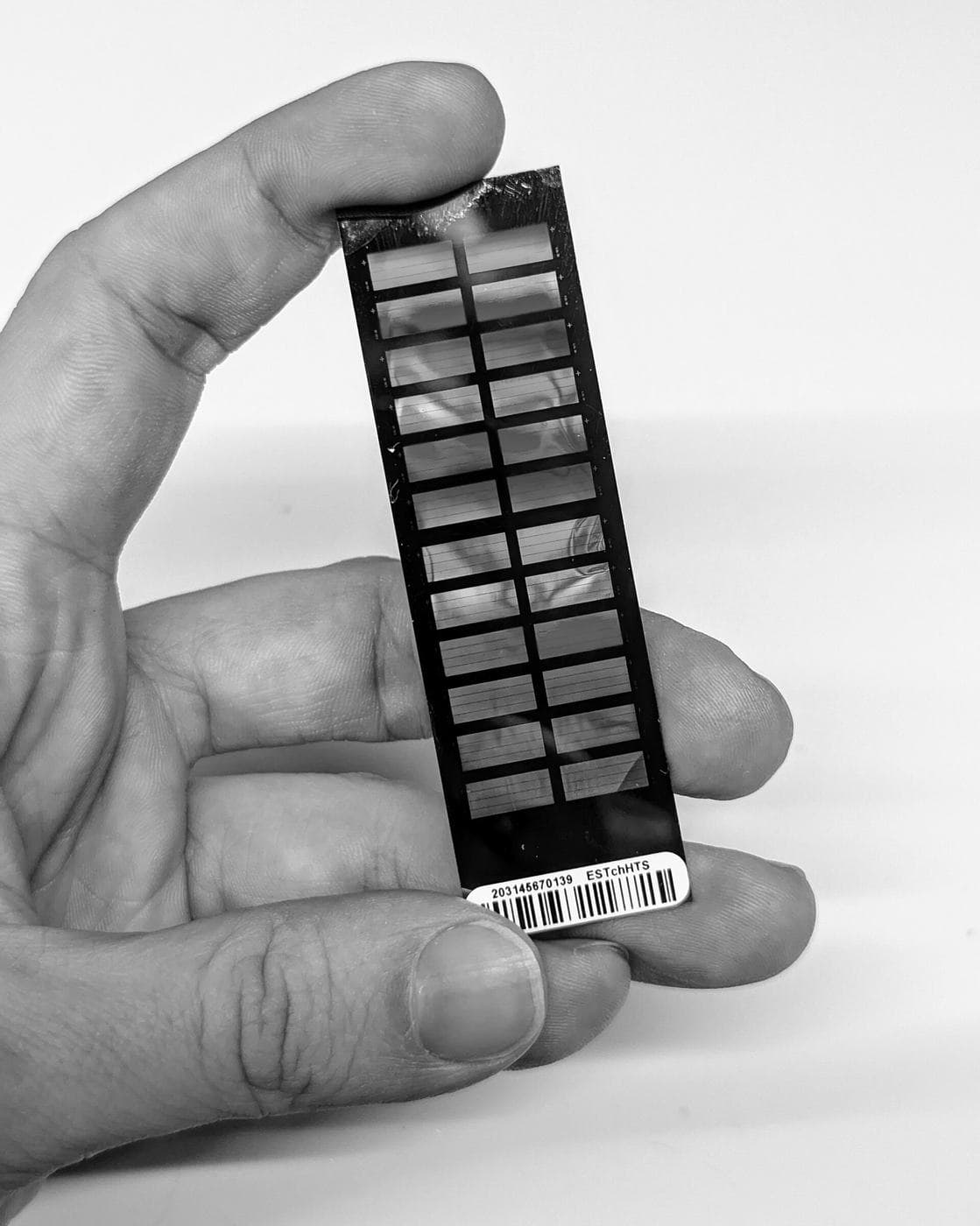
- Read on GeneChipAt MRNA Scientific in Penang, the RNA is purified, its expression pattern is read on GeneChip microarrays, and GeneMatrix analyses the result.
- Reviewed, then releasedOnly runs that pass quality control are reported. A laboratory scientist verifies the results and a pathologist authorises the report before it goes to the requesting clinician.
The research behind it
- 2006Blood cells are shown to express most of the genes active in other tissues and to reflect biology throughout the body.Liew et al., J Lab Clin Med
- 2007Peripheral-blood transcriptomics is set out as a route to disease and risk assessment.Mohr and Liew, Trends Mol Med
- 2008A five-gene blood panel is described for colorectal cancer.Han et al., Clin Cancer Res
- 2010A seven-gene blood panel is developed for stratifying current colorectal cancer risk.Marshall et al., Int J Cancer
- 2010The colorectal panel is studied in a case-control cohort in Malaysia.Yip et al., J Exp Clin Cancer Res
- 2013A blood RNA panel is studied for left- and right-sided colorectal neoplasms.Chao et al., J Exp Clin Cancer Res
- 2015A method is set out for finding several disease signatures in one blood sample, studied across ten diseases.Chao, Cheng and Liew, Microarrays
- 2026BGLC builds an enterprise version of GeneMatrix Systems and completes internal workflow testing.BGLC Form 10-Q, second quarter 2026
Dr. Choong-Chin Liew is an author of each study listed.
What a BGS report is. A BGS report gives screening and risk information for a clinician to discuss with their patient. It is not a diagnosis, and its score is not a probability of disease. A positive result should be followed up with confirmatory diagnostic testing, as the clinician decides. How blood-based genomic screening works
MRNA Scientific Sdn. Bhd., BGLC’s diagnostics company, is the first laboratory on 1Lab, using it internally ahead of its production workflow. From its laboratory in Penang it runs BGLC’s blood-based genomic screening and is preparing for the VitaGuard™ MRD platform. 1Lab is designed to carry that work to hundreds of tests a month.
1Lab works the way well-run laboratories do: controls on every run, new reagent lots verified before use, instruments that must be in service to run, decisions by named people the laboratory director has authorised, and a record that is added to and never rewritten.
Built for everyone a test touches
Contact usFor laboratories
- ReceptionEvery clinic in one listAccession, acceptance, deviation and rejection, with recollection requested automatically
- BenchRuns with controlsPlates, reagent lots and instruments tracked; results only from an accepted run
- ReleaseTwo named peopleA scientist verifies and an authorised signatory releases; corrected reports are marked, the original kept and the clinic told
- CriticalResults that cannot waitPhoned to the requesting clinician, with the read-back recorded
- AgentsDrafts, not decisionsPrivate AI designed to draft messages and read forms; rules check each draft and staff decide
- AssaysModules that plug inGeneMatrix Enterprise is built in first, and further assays join the same way
For clinics
- OrderingOne requisitionSeveral tests on one order, with a label for each tube applied at collection
- DispatchManifests, not phone callsEvery specimen sent and received is accounted for
- StatusWhere every test standsRequested, in process or needing action, with the next step spelled out
- ReportsAlways the current versionReleased reports with their full history; a corrected report is marked and the clinic told
- ConnectFrom your own systemsOrder, track and receive released reports from a clinic system, through the planned 1Lab API
For patients, next
- ReportsOn web and mobileScreening reports, available once the patient’s clinician has reviewed them
- AnswersIn plain languageExplanations of the patient’s own released report, switched on after clinical review
- Follow-upGuided by their clinicianNext steps come from the professionals who know them
 Your reports
What does this report tell me?
It gives screening and risk information, not a diagnosis. Your clinician will go through it with you and talk about next steps.
Ask a question
Work with us
Running a clinic, a laboratory or an assay, or building systems that connect to them? Bring it onto 1Lab, and give every test one record from order to report.
BGLC 1Lab is developed by BioNexus Gene Lab Corp. (Nasdaq: BGLC). About MRNA Scientific
1Lab is in internal use at MRNA Scientific and not yet in its production workflow. GeneMatrix Enterprise is built into 1Lab and not yet released; release follows clinical validation. The agent, API and patient features are designed or planned, and product screens on this page are designs shown with demonstration data. The CogniAI license is a pending agreement whose closing may not occur.
Statements on this page about plans, expectations and future events are forward-looking statements that involve risks and uncertainties, and actual results may differ materially. See the forward-looking statements notice and the risk factors in BGLC's SEC filings.
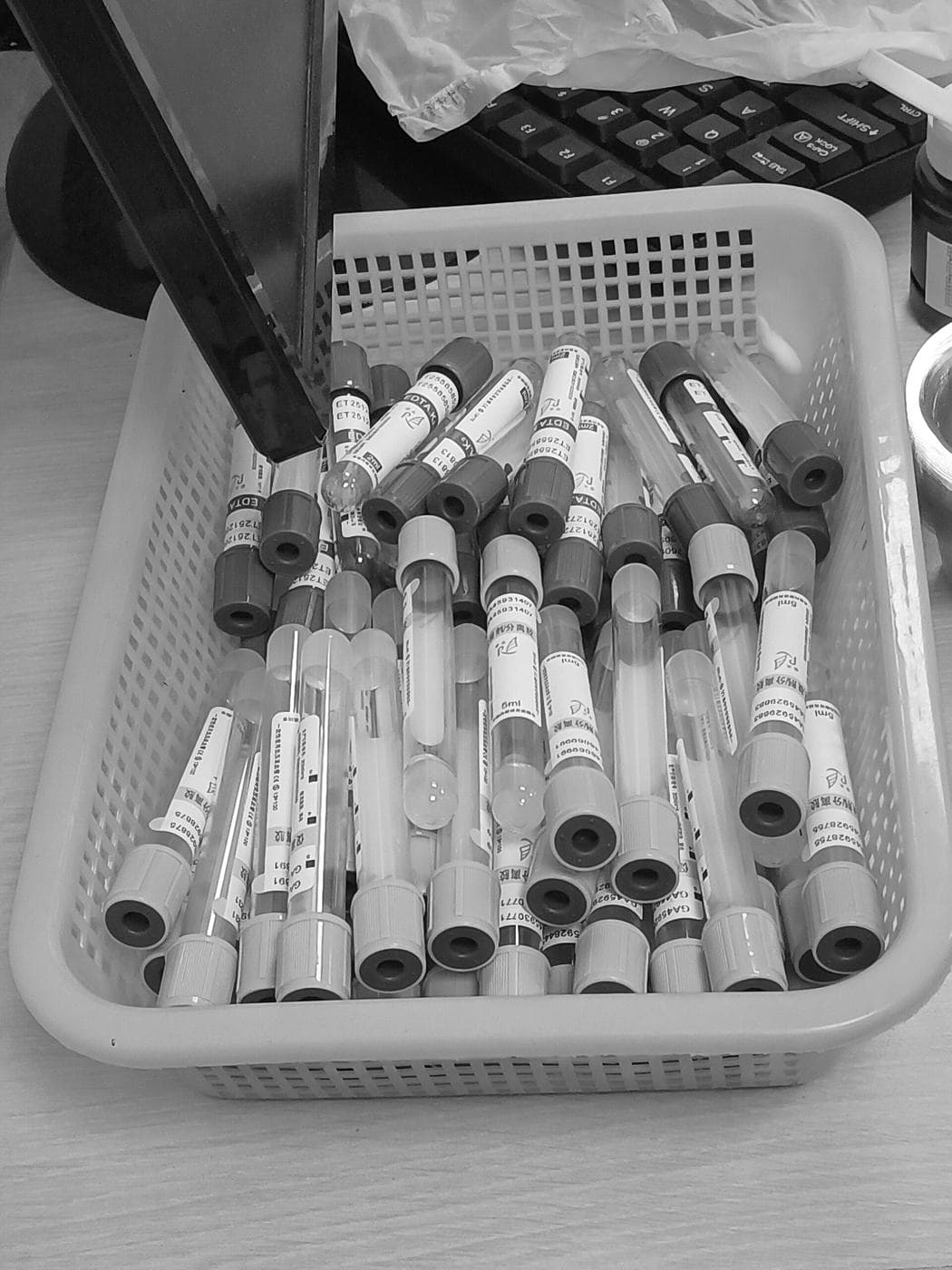
Pictures, shown in greyscale, are of laboratories in general: blood collection tubes by Fumikas Sagisavas, CC0; sample preparation, U.S. Navy photo by Jim Watson, public domain; DNA microarray chip by ErikAbner, CC BY 4.0; tube rack by Shixart1985, CC BY 2.0; centrifuge by Ivangiesen, CC0; scientist at a microscope by Diane A. Reid, public domain; blood collection needle by Whispyhistory, CC BY 3.0. All via Wikimedia Commons.


